Back-to-School Reset: How Martial Arts Builds Focus for the Classroom
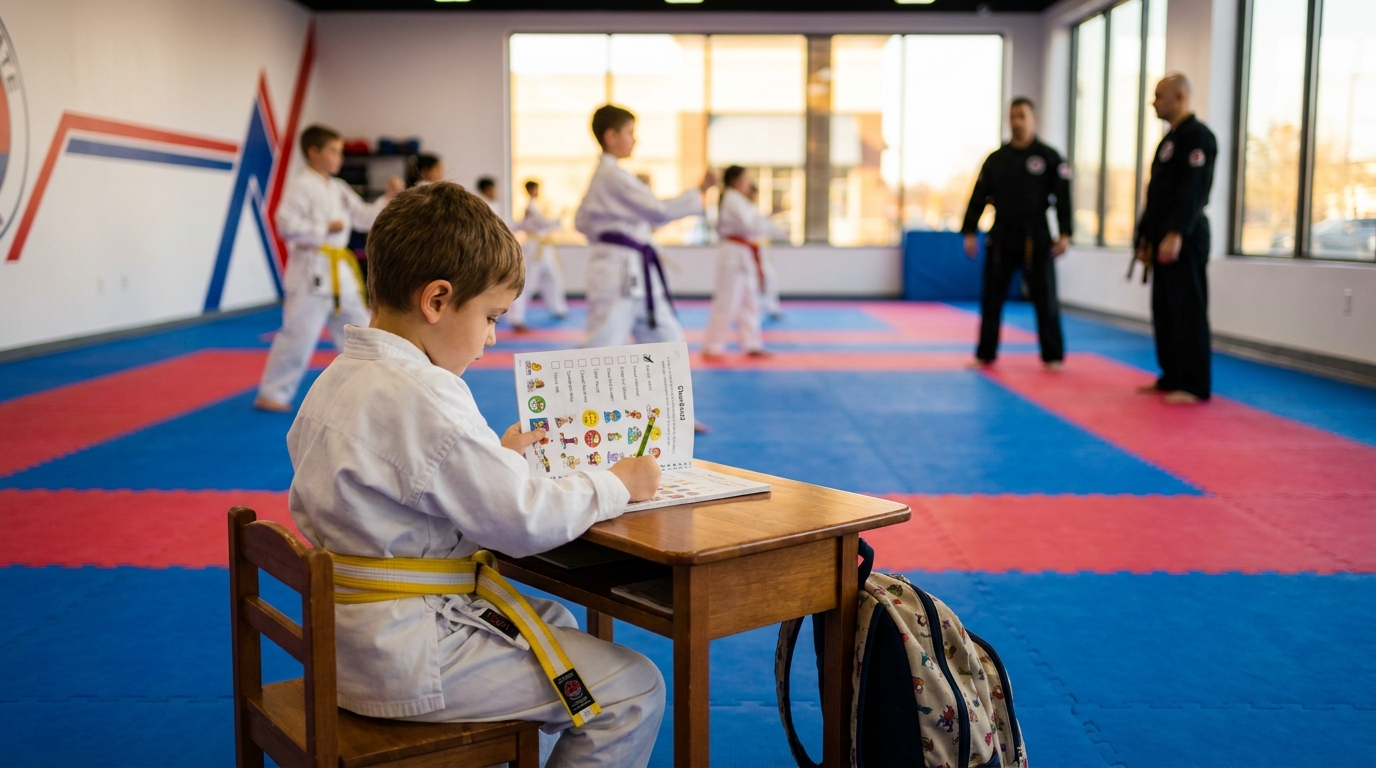
August has a way of sneaking up on families. One week you're at the pool, and the next you're hunting for missing school shoes and trying to remember how to wake a seven-year-old before 7 a.m. If you're a parent in Parkland right now, you're probably thinking a lot about routines, homework habits, and how to get your kid's brain back into "listening mode" after a summer of freedom.
Here's something we've noticed after more than twenty years of teaching martial arts to local kids: the same skills that help a child bow onto the mat, wait their turn, and finish a drill they don't love are the exact skills that help them sit still during math lessons and push through a tough homework assignment. Focus isn't something kids are just born with or without — it's trained. And martial arts happens to be a really effective place to train it.
Why the Mat and the Classroom Aren't So Different
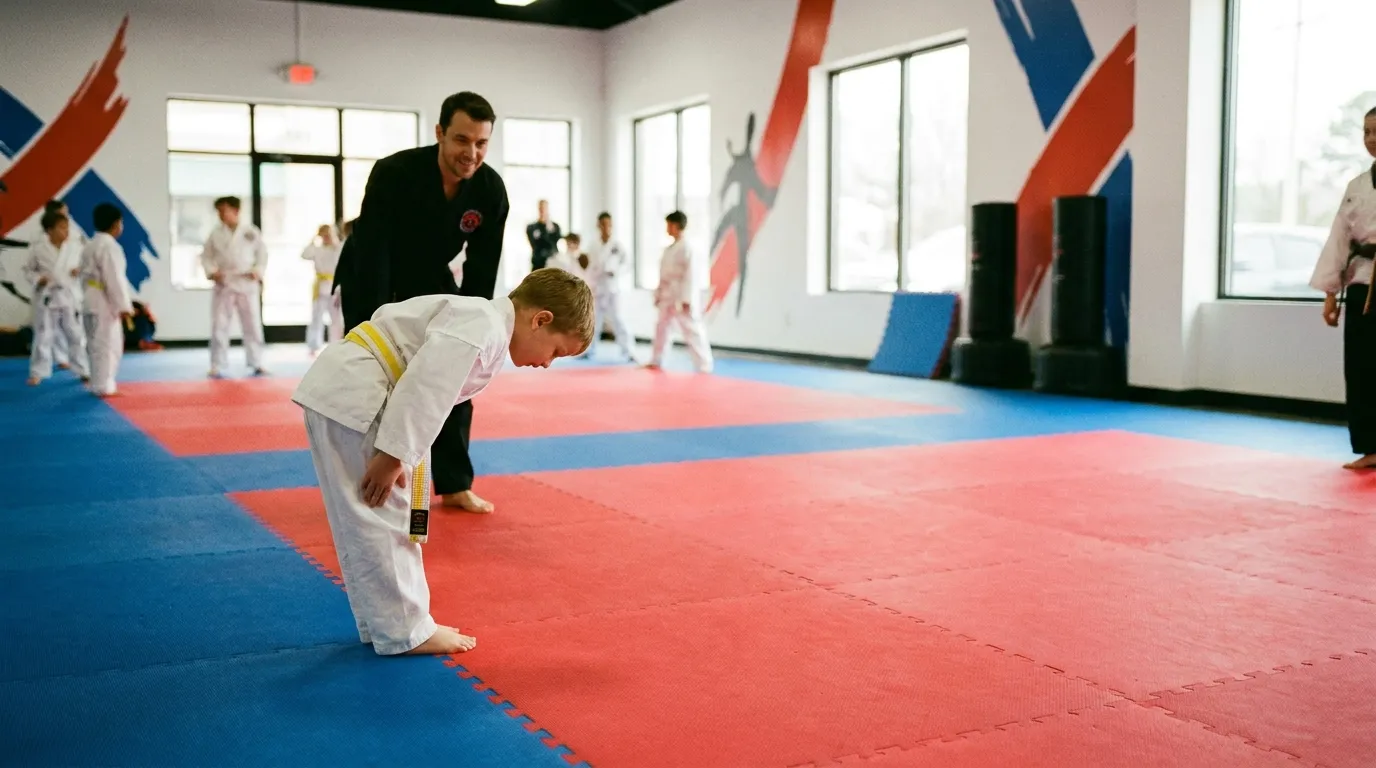
Think about what we ask kids to do in a typical martial arts class: stand still and listen while an instructor explains something, follow multi-step instructions, control their body, wait patiently for their turn, and try again after messing up. Now think about a classroom. It's the same list.
The difference is that on the mat, kids get to practice these skills in short, structured bursts, with immediate feedback and a clear sense of progress. A child doesn't just hear "pay attention" — they're shown exactly what paying attention looks like, and they get to feel the payoff when a technique finally clicks. That repetition builds a mental muscle that carries over. Teachers often tell us they can spot the martial arts kids in class because they settle down faster after transitions and recover more quickly when something doesn't go their way.
Concrete Ways Martial Arts Skills Show Up at Home
It's not just theory. Here are specific carryovers parents mention to us often:
- Listening the first time. In class, kids practice responding to an instruction without it being repeated three times. At home, this often shows up as fewer "I didn't hear you" moments when it's time to start homework.
- Sitting through a full task. A belt-testing routine or a combo drill requires a child to stay with something uncomfortable until it's done. That same stamina helps them push through the last five math problems instead of melting down.
- Self-correction instead of giving up. Martial arts teaches kids that messing up a kick isn't failure — it's information. Kids who internalize this tend to erase and retry a homework problem instead of shutting the notebook.
- Respect for routine. Bowing in, lining up by rank, warming up the same way each class — these small rituals train a child's brain to expect structure, which makes classroom routines feel familiar rather than restrictive.
None of this happens by accident. It's built into how we structure classes for the Kids (ages 7-11) and Kinderkicker (ages 4-6) programs at Evolution Martial Arts, where every class blends physical skill with these focus-building habits.
Try This at Home This Week
You don't need a black belt to borrow a few martial arts habits for your own homework routine:
- Start with a "bow in" moment. Before homework, have your child take three deep breaths and say out loud what they're about to work on. This mirrors the focus-setting ritual that starts every class.
- Break it into rounds. Instead of "finish your homework,” try "let's do two rounds of ten minutes, then a break,” the same way we break drills into manageable sets.
- Praise effort, not just results. "You kept trying that word problem even when it was hard" sounds a lot like what an instructor says after a student lands a kick on the fifth attempt, not the first.4. Use a visual marker for progress. Belts mark progress in martial arts. At home, a simple checklist or sticker chart gives the same sense of forward motion.
A Word on Confidence, Not Just Focus
Focus gets a child through the assignment, but confidence is what makes them raise their hand to ask a question or admit they didn't understand something. That's really the heart of what we aim for with our core values — confidence, discipline, focus, courtesy, and perseverance. A child who's used to trying a new technique in front of classmates on the mat is often more comfortable trying a new idea out loud in a classroom too.
For students who want to go deeper, our Black Belt Leadership Program builds directly on these habits, giving older kids and teens more responsibility, mentorship opportunities, and leadership practice that stretches well beyond the dojo.
Getting Back Into the Swing of Things
If your family is already easing back into school-year schedules, adding one more thing might feel like a lot. But a lot of parents find that a consistent, twice-a-week martial arts class actually makes the week feel more manageable, not less — it gives kids a predictable outlet for energy and a reset point between school and homework time.
Our class schedule runs Monday through Thursday from 3:30 to 8:15 p.m., Friday from 3:30 to 7 p.m., and Saturday mornings from 8 a.m. to 1 p.m., so there's usually a slot that fits around soccer practice or piano lessons.
Come See What a Class Feels Like
The best way to understand how this all translates for your own child is to watch a class in person. If you're curious whether martial arts might be the missing piece in your family's back-to-school routine, we'd love to have you visit. You can book a free trial class and see firsthand how focus, discipline, and confidence get built one class at a time.